
How the factory works
Qontinui runs a fleet of AI agents on your codebase. You state intent and review outcomes. The six processes below are how the work in between gets done, and how agents answer their own questions instead of asking you.
Every animation on this page is illustrative: a hand-authored run drawn to explain the process, not a recording of the factory.
1.Plan lifecycle
Work starts as a written plan. An agent vets it, a session implements it, opens a pull request, gets it through CI and the merge train, and marks it shipped once it has landed. Each step is recorded, so the plan's status is read from what happened rather than from what someone claimed.
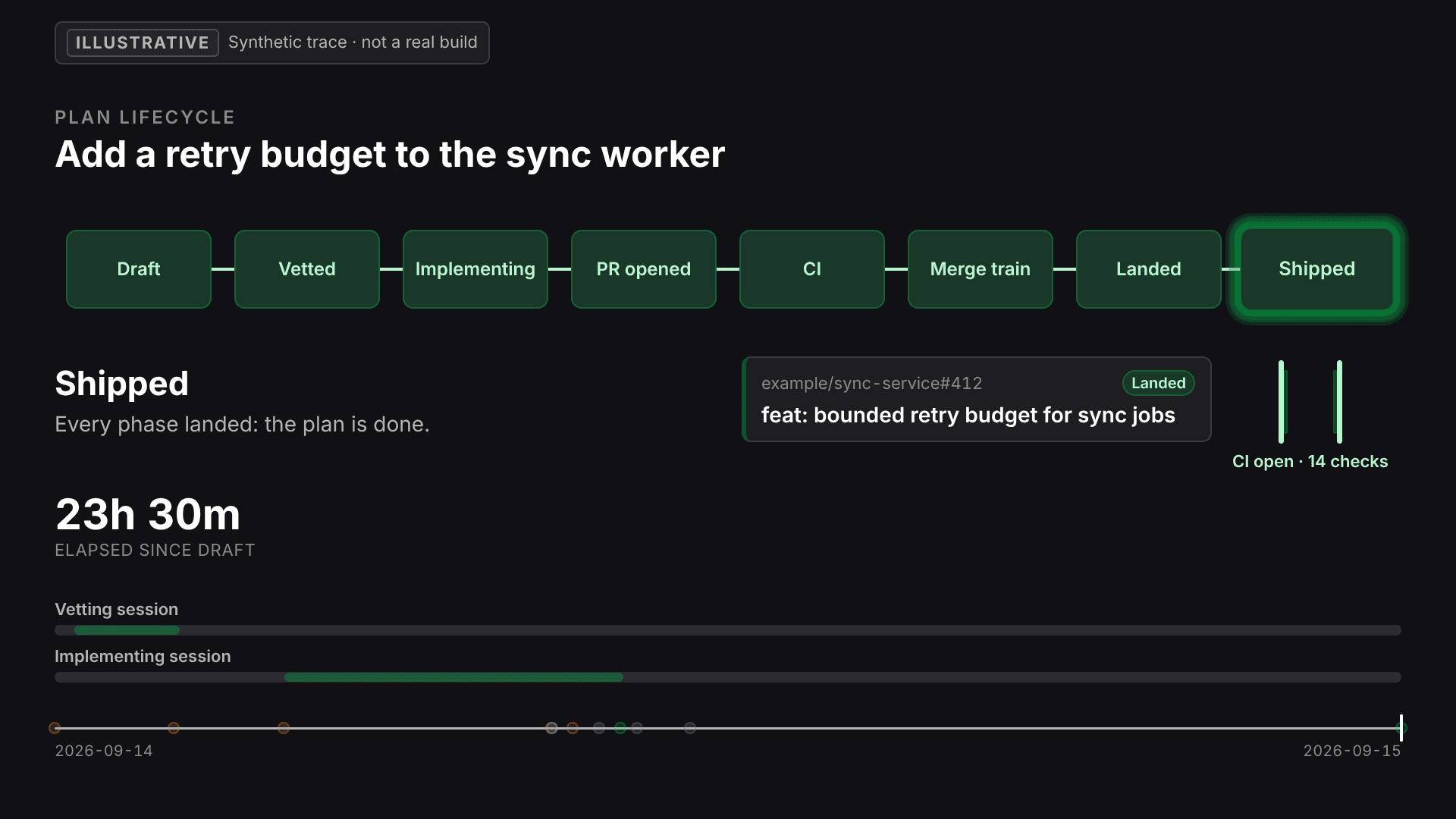
IllustrativePlan lifecycle: a hand-authored run, not a recording of the factory. 2.The digital twin
GitHub, CI, machines and agent sessions are mirrored into one model of the development process. Agents decide from that model instead of guessing. The twin includes you: your policies, product intent and decisions are written down and served to every session, so a question you have already answered is answered without waking you.
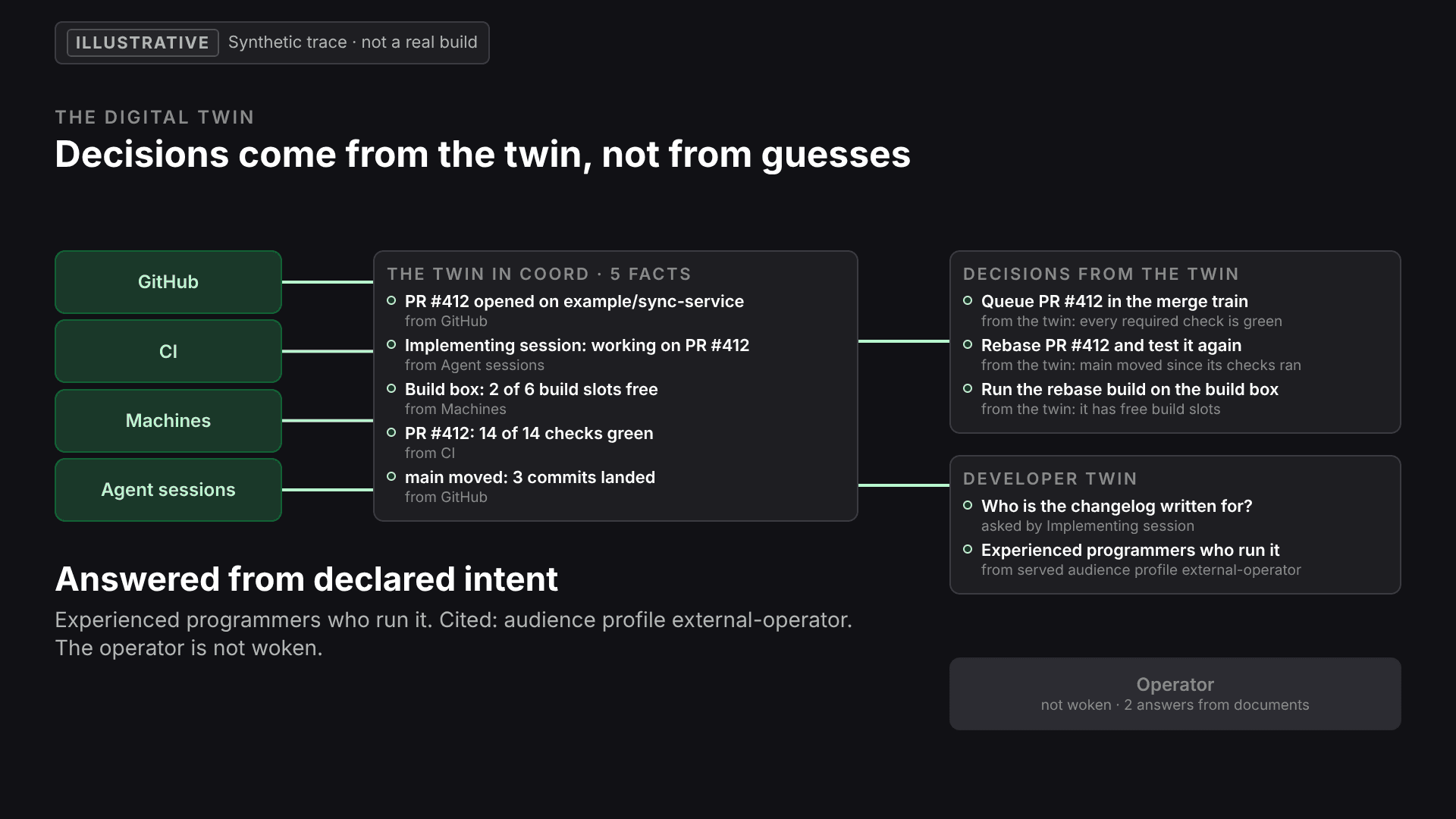
IllustrativeThe digital twin: a hand-authored run, not a recording of the factory. 3.Gates and continuations
When a session is blocked on something outside its control, such as a CI run, another pull request or a deploy, it registers a gate on that condition and ends. The factory watches for the condition. When it holds, a new session picks the work up where the last one left it.
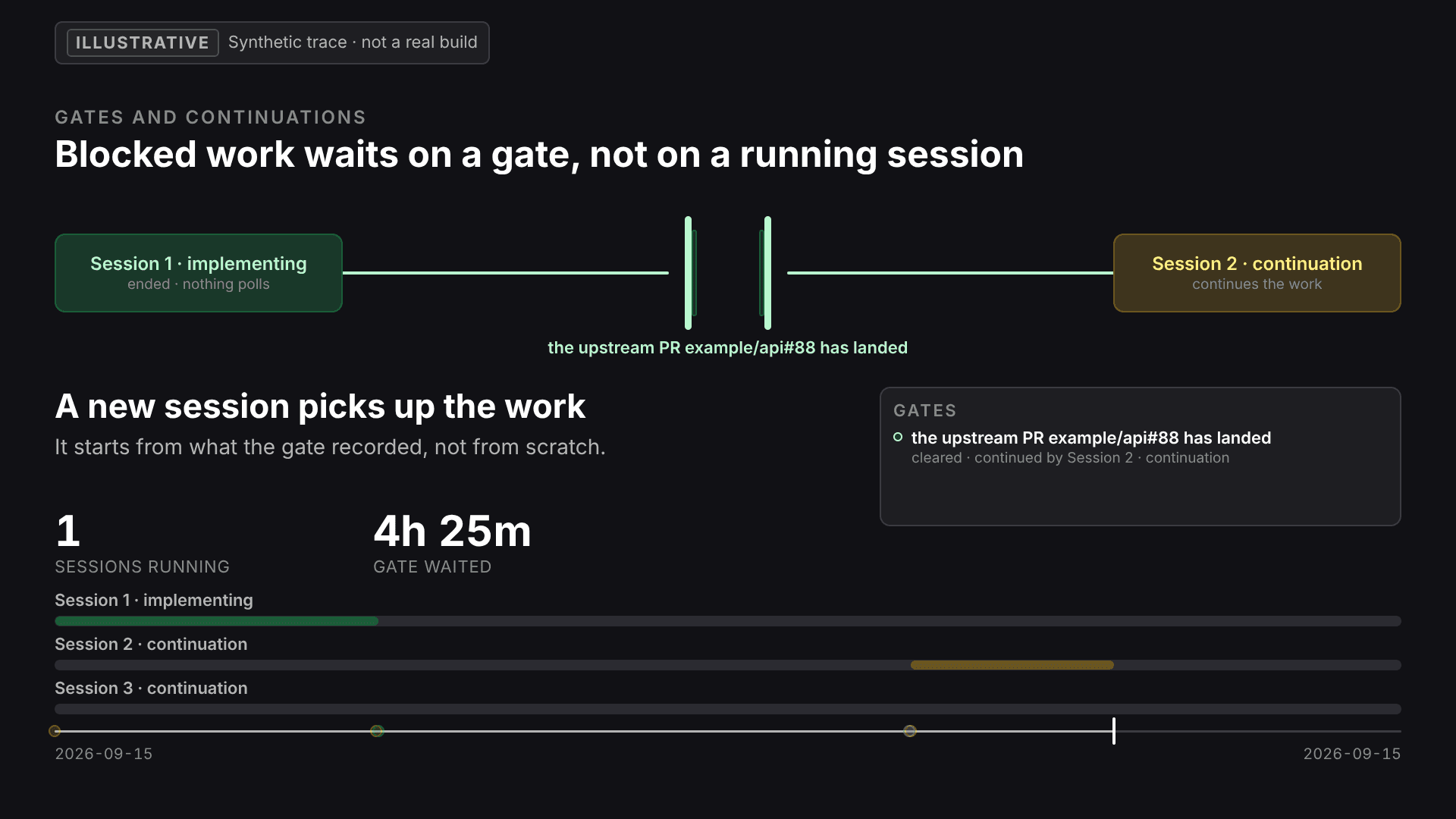
IllustrativeGates and continuations: a hand-authored run, not a recording of the factory. 4.The merge train
Pull requests from many sessions queue for main. Each is rebased onto the latest main, tested again and landed in order. A pull request that conflicts steps out of line until the conflict is fixed, so it never blocks the ones behind it.
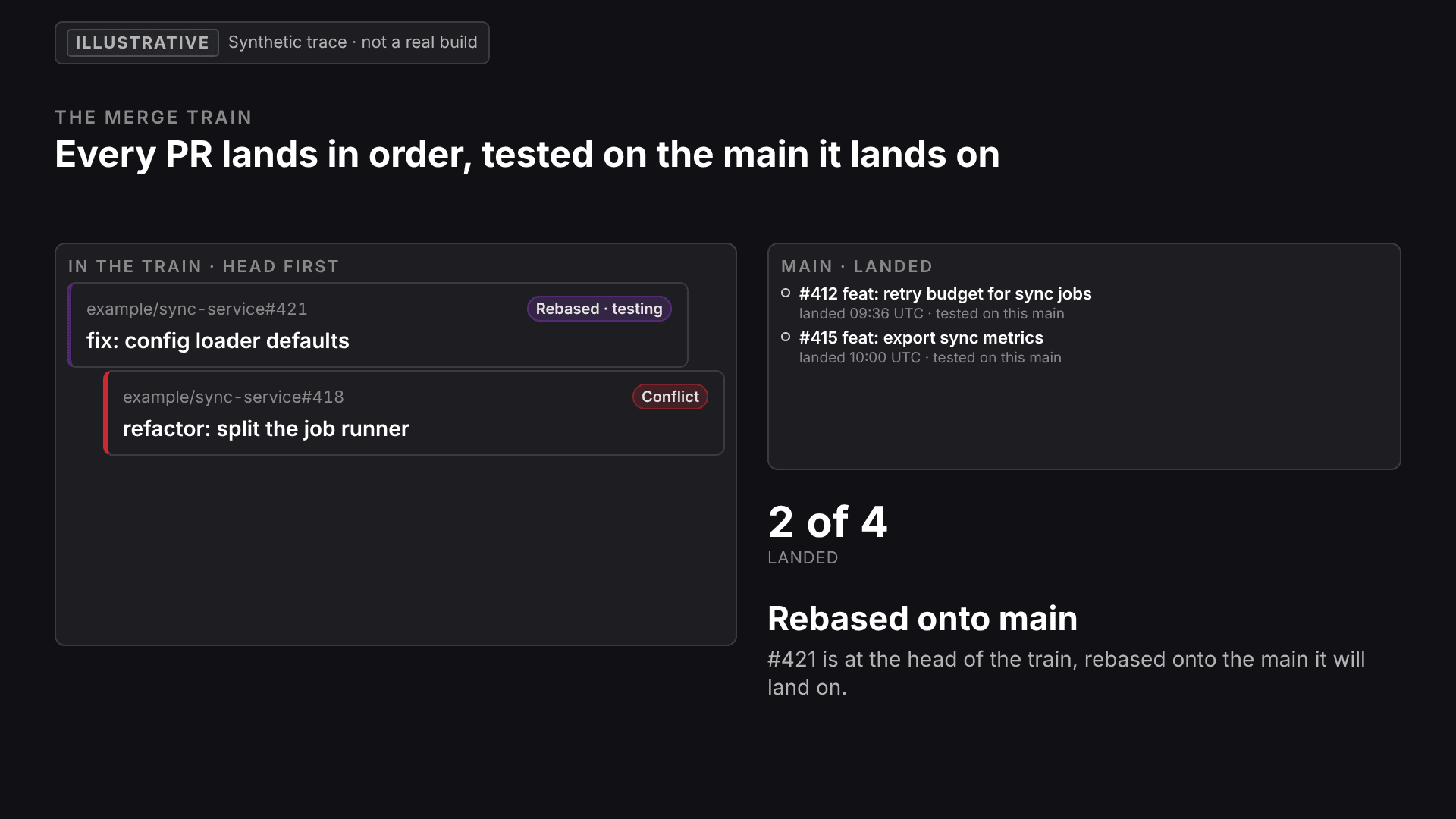
IllustrativeThe merge train: a hand-authored run, not a recording of the factory. 5.The fleet
Many agent sessions run at once across several machines, each in its own isolated worktree. They coordinate by declaring what they intend to change and claiming it first, so two sessions find out they would collide before either writes a line.
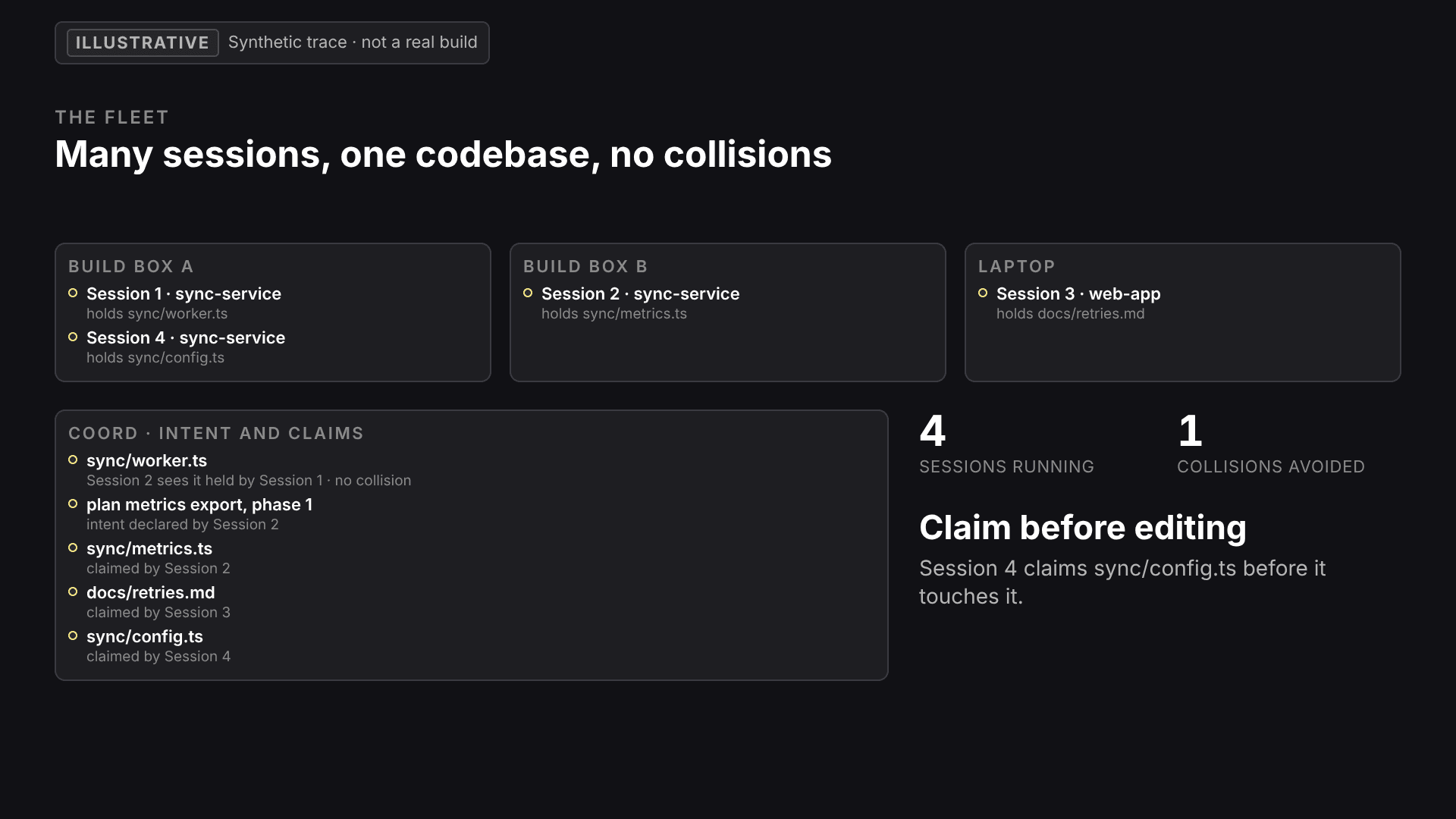
IllustrativeThe fleet: a hand-authored run, not a recording of the factory. 6.Self-correction
When CI goes red, the session reads the failure from the CI log, works out the cause, pushes a fix and lets CI run again. It goes round that loop until the build is green; you are told what happened rather than asked to fix it.
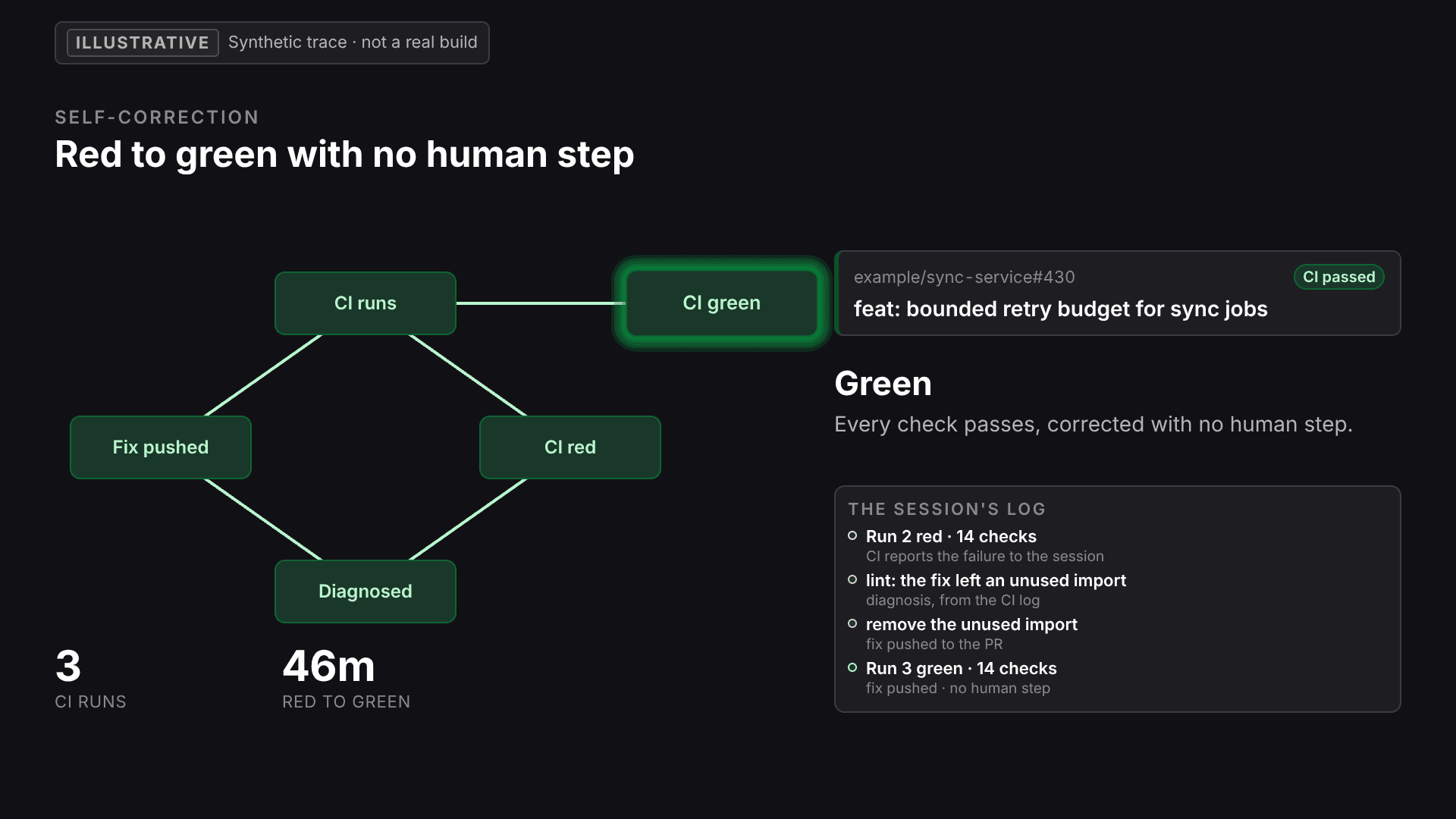
IllustrativeSelf-correction: a hand-authored run, not a recording of the factory.